Oxford Street pedestrianised: Shoppers react to traffic-free zone
London's most famous shopping street is now car-free, prompting mixed reactions from pedestrians, drivers, and city officials.
By Molly Harrison ·
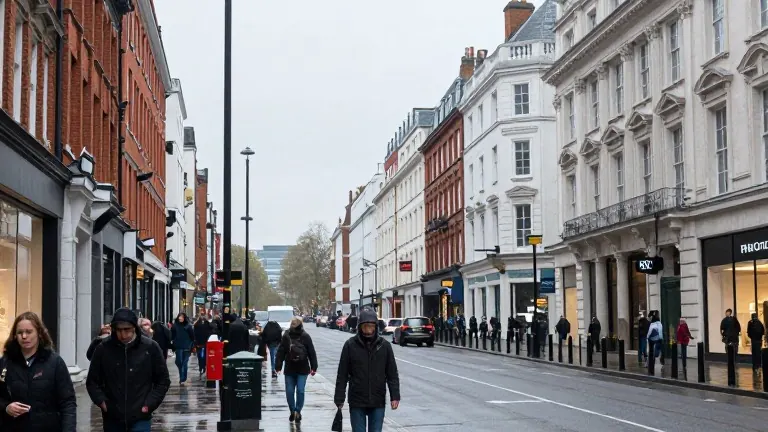
Oxford Street is now pedestrian-only for nearly a mile, ending decades of debate over the city's busiest shopping corridor. The change, which bans buses, bikes, taxis, and private cars from the stretch between Oxford Circus and Marble Arch, took effect on Monday morning, October 26, 2026. The move was designed to create more space for shoppers in time for the holiday season.
London Mayor Sadiq Khan described the opening as a "momentous day." He noted that the street had seen a decline over the last two decades and argued that prioritizing people over traffic would improve footfall and spending. Khan, who began his career in retail on Oxford Street, stated that the project aims to be a proof of concept for urban planning.
The temporary closure is part of a larger transformation. A £150 million project is planned to add trees, seating, and level plazas for events. Construction on these permanent improvements is scheduled to begin in spring 2027. The initial phase allows officials to monitor how the street functions without motor vehicles before finalizing the long-term design.
Shoppers responded positively to the increased space. Daniel Te, who moved to London from the United States in July, said the new layout felt "entirely new" and more exciting than the previous scramble crossing at Oxford Circus. Te, a former city planner, admitted he usually avoided the street because it was "too busy." He now feels more inclined to visit because there is room to walk and browse without jostling against other pedestrians.
Raquel Cox, a visitor from Ireland, also praised the change. She and her companion went to the street after seeing news reports about the pedestrianisation. Cox acknowledged that surrounding streets might become busier, but she described the shopping experience as better than before. Abbas Shigival, who operates a souvenir kiosk at the start of the pedestrian zone, said the morning was slightly busier than usual. He called the environment more pleasant, noting that customers appeared happier while walking.
Transport for London Chief Operating Officer Claire Mann addressed concerns about public transit. She said there would be plenty of capacity for passengers and that reliability should not be affected. Many double-decker buses have been diverted to neighboring roads. Mann pointed to Bond Street and the Elizabeth Line as alternative ways to reach the area while officials monitor ridership data.
Not everyone supports the change. Ben McMullan, a taxi driver, said traffic on surrounding streets was worse and accessibility was a major issue. He described getting stuck in areas that were previously clear. McMullan dropped off several customers who struggled to navigate the street on foot, including a woman with walking difficulties. He feared the lack of direct car access would cause some people to avoid using taxis.
Cyclists also faced new barriers. Jack, a cyclist returning from a construction job, was stopped by security guards multiple times while riding down the street. He said he intended to continue riding despite the rules because alternative routes would make his commute longer. Jack expressed disagreement with the pedestrianisation on principle, comparing it to low-traffic neighborhoods that he believes make it harder for people to use vehicles.
The city will closely monitor the changes to ensure they work for all residents and visitors. Officials plan to gather feedback during this first phase to guide the permanent infrastructure buildout. The street remains open to pedestrians, while vehicles follow new routes through adjacent roads.
Source: The Guardian