Iran Says War Plans Will Not Alter Its Position as Oil Trades at $115
Indirect contacts with Washington continue while the Strait of Hormuz reports a tanker disabled by a projectile.
By Molly Harrison ·
Tehran maintains its stance regardless of whether the United States launches another round of attacks.
Iranian officials said Sunday that indirect communication with Washington remains active and that military action would not alter the country's positions. Brent crude traded near $115 a barrel early Monday, with prices elevated over supply concerns tied to conflicts in the Middle East and Ukraine as winter demand for gas approaches in the Northern Hemisphere.
President Trump described his next step as a binary choice: "I have a decision to make: Do I finish it off, which would be very easy to do, or do I make a deal?" he said in an interview on Fox News' "Sunday Morning Futures." He previously said the U.S. "may do another little Epic Fury," referring to the joint U.S.-Israeli campaign against Iran that started Feb. 28, and stated the United States controls the Strait of Hormuz. A third aircraft carrier group has deployed to the region alongside other U.S. forces, while diplomatic staffing there has been reduced. speculation has circulated that Trump could order strikes after the Nov. 3 midterms.
Foreign Minister Abbas Araghchi, speaking at a televised event in Tehran, said a new war would not change the government's course. "Whether there is war or not, our policies remain the same," Araghchi said, adding that Washington and Israel "will achieve no different outcome" after two prior attempts. Foreign ministry spokesperson Esmaeil Baqaei said messages continue to reach the U.S. through intermediaries, though direct negotiations have appeared stalled for weeks.
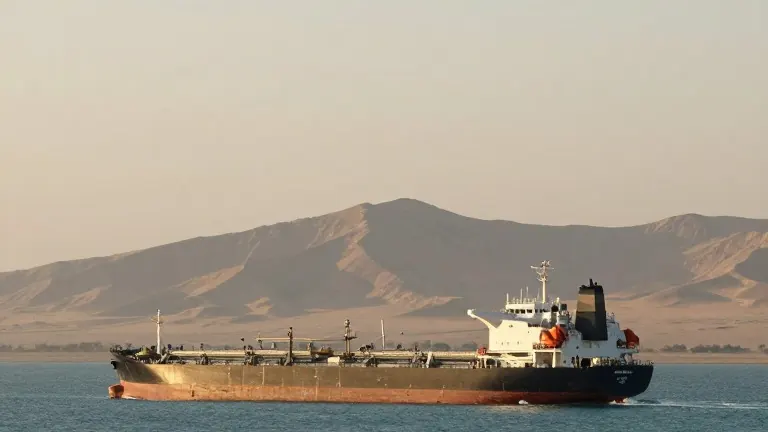
The U.K. navy's Maritime Trade Operations center reported that a tanker departing the Strait of Hormuz was struck Friday by an unknown projectile that disabled the vessel, with the crew safe. Iran claimed to have hit at least four tankers near the strait Thursday, claims that were not corroborated; Trump accused Tehran of fabricating such attacks to raise prices before the midterms. Saudi Defense Minister Khalid bin Salman, Pakistani army chief General Asim Munir and Turkish intelligence chief Ibrahim Kalin were due in Tehran on Monday for security talks with officials including security chief Mohsen Rezaei, according to Iranian and Saudi authorities.
In Israel, Prime Minister Benjamin Netanyahu warned Sunday that Iran and its proxies could disrupt Tuesday's elections, saying, "Don't test us." Iran's foreign ministry said the election result "makes no difference" to Tehran. Security talks in Tehran are scheduled for Monday, and U.S. midterm elections take place Nov. 3.
UKMTO reported Monday that a tanker leaving the Strait of Hormuz was disabled Friday by a projectile of unknown origin.
Source: CBS News