Illinois insurers still cite missing helmets despite 1985 court ruling
While state courts have largely barred the argument, adjusters frequently use it in settlement negotiations to reduce payouts for motorcycle riders.
By Rafael Ortega ·
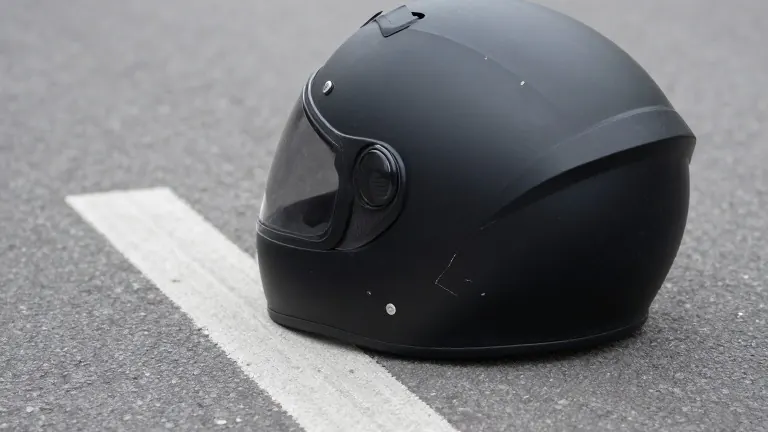
Insurance adjusters in Illinois continue to cite missing helmets as a reason to lower injury payouts, even though state courts have repeatedly ruled the argument holds little legal weight. The practice creates friction between what insurers assert during negotiations and what appellate decisions permit in a courtroom. Riders often worry that a lack of headgear will disqualify them from compensation, but the law treats the issue differently than the insurance industry suggests.
Illinois does not require motorcycle riders to wear helmets. A November 2026 table from the Insurance Institute for Highway Safety confirms the state has no helmet mandate. The only strict requirement involves eye protection. Section 11-1404 of the Illinois Vehicle Code mandates that operators and passengers use glasses, goggles, or a transparent shield. Chicago motorcycle accident attorneys at Kermani LLP note that many riders mistakenly believe a missing helmet determines the outcome of their claim, when courts have long treated it as a distinct legal question.
The legal foundation for excluding helmet arguments dates back to 1985. That year, an Illinois appellate court issued the Hukill decision, which rejected the use of a missing helmet to establish comparative negligence or reduce damages. The court relied on the Illinois Supreme Court’s Clarkson decision from the same year. Clarkson had established that not using a seat belt could not be used to prove fault or reduce damages in personal injury cases. In 1991, another appellate court reaffirmed this stance in the Moore decision, ruling that evidence of a rider not wearing a helmet is generally inadmissible to prove contributory negligence.
These rulings restrict what defendants can present to a jury. However, they do not prevent an insurance adjuster from raising the issue during settlement talks. When an adjuster presses the helmet point, they are arguing a position that Illinois courts have generally refused to count against riders in formal litigation. The distinction matters because settlement offers are often based on perceived liability rather than strict courtroom admissibility rules.
Illinois follows a modified comparative fault rule under Section 2-1116. This statute reduces a plaintiff’s award by their percentage of fault and bars recovery if that share exceeds 50 percent. A missing helmet does not cause a collision, so it rarely fits into this fault calculation. Insurers instead focus on conduct that may have contributed to the crash. Common arguments include riding too fast for traffic conditions, changing lanes without signaling, wearing dark clothing that reduced visibility, or failing to wear the required eyewear.
Insurers also sometimes shift the argument from fault to injury severity. They may claim that a helmet would have made a head injury less severe. An Illinois appellate court has rejected this approach as a method to reduce damages, giving it little legal weight. The rider must still prove that the crash caused each specific injury. Assumptions about rider behavior can complicate this proof if documentation is lacking.
Medical records play a central role in proving injury severity. Gaps in treatment give adjusters room to argue that an injury is unrelated to the crash. Steady, documented treatment ties each injury directly to the accident date. Riders should maintain complete records of every visit, scan, and discharge paper to support their claims.
Legal counsel helps preserve evidence before it is lost or altered. Attorneys work to protect the motorcycle, the gear worn during the crash, and official crash records. Illinois sets a two-year limit for most injury lawsuits under Section 13-202, counted from the date of injury. If a road defect contributed to the accident, Section 8-101 of the Tort Immunity Act generally provides only one year to sue a city or other local public entity.
Preserving physical evidence is critical. Riders should keep their damaged bike unrepaired until it is photographed. Worn gear, including jackets, gloves, boots, and eyewear, should be saved. The official police report, including the officer’s diagram, narrative, and any citations, must be collected. Organized photos and treatment records allow riders to check any fault percentage against the available evidence before accepting an offer.